RESEARCH
Research
My research asks how people make knowledge, and make do, with whatever is at hand. Across the projects below I develop bricolage as a mode of knowledge production, and follow it from the writing desk, into the street, and into the franchise. My work sits at the meeting point of bricolage theory, affective and new materialist thought, post-qualitative inquiry, and, increasingly, artificial intelligence.
Full list of publications and presentations: Google Scholar and ResearchGate.
PROJECT 01
Bricolage in Affective Ethnography
Part of a larger project on bricolage as a mode of knowledge production, this strand asks what happens to the researcher, and to research itself, when knowledge is made with keyboards, reference software and generative AI, not only about them. Working in the tradition of affective ethnography, it treats writing as data in motion and keeps in the entanglements, improvisations and drift that conventional method sections quietly erase. It develops the idea of bricolagic agency, agency distributed across human and nonhuman participants, and examines the politics of naming and ‘affective veiling’ in our everyday exchanges with AI.
“The interaction with AI appears as affective veiling, in which the barely perceptible shifts in affects emerge as replications of the power asymmetries on which AI was once trained.”
Tyl, L. P., & Pullen, A. (2026). Experimenting with AI: Reflexivity, bricolage entanglements, and the politics of naming. In M. Cozza, S. Gherardi, L. L. Parolin, & C. Pellegrinelli (Eds.), Affective ethnography in and beyond organization studies: Canon and dissonance in a research style. Bristol University Press.

Łódź, 2016 — the Black Protest. Source: Gazeta Wyborcza
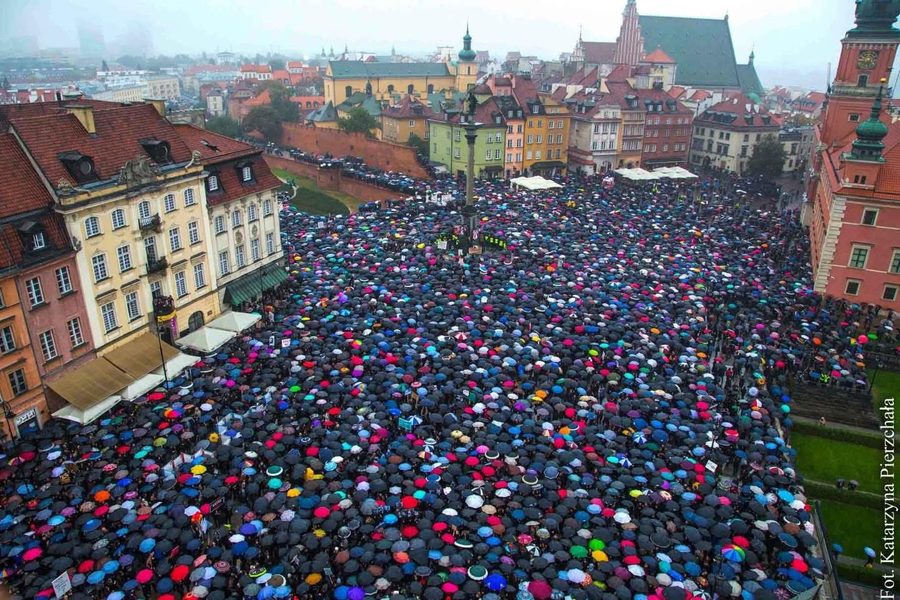
Warsaw, 2016 — Castle Square. Source: Katarzyna Pierzchała
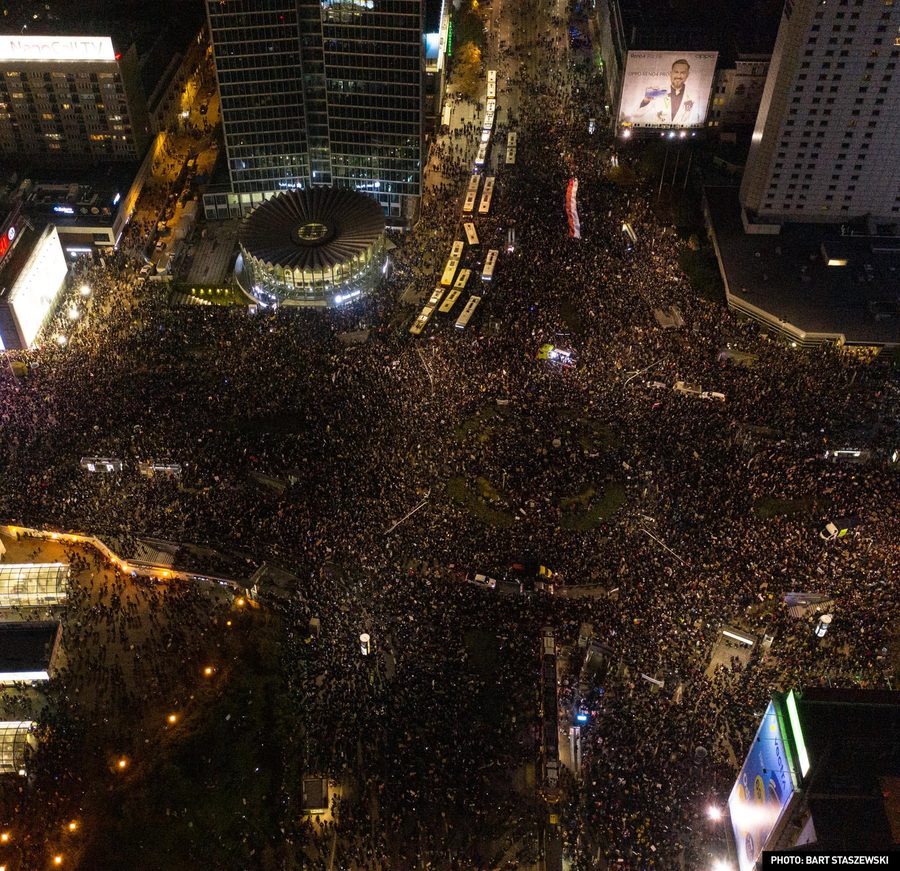
Warsaw, 2020 — from above. Source: Bartosz Staszewski
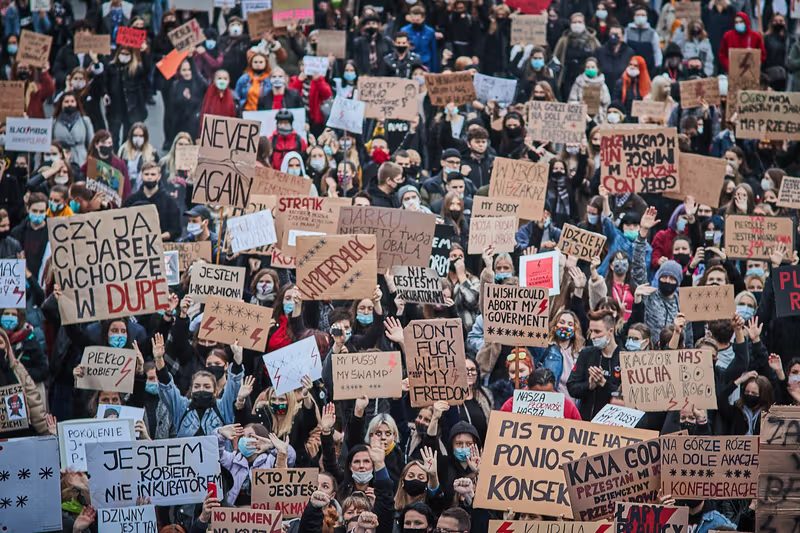
Placards made from whatever was at hand. Source: Tomasz Stańczak
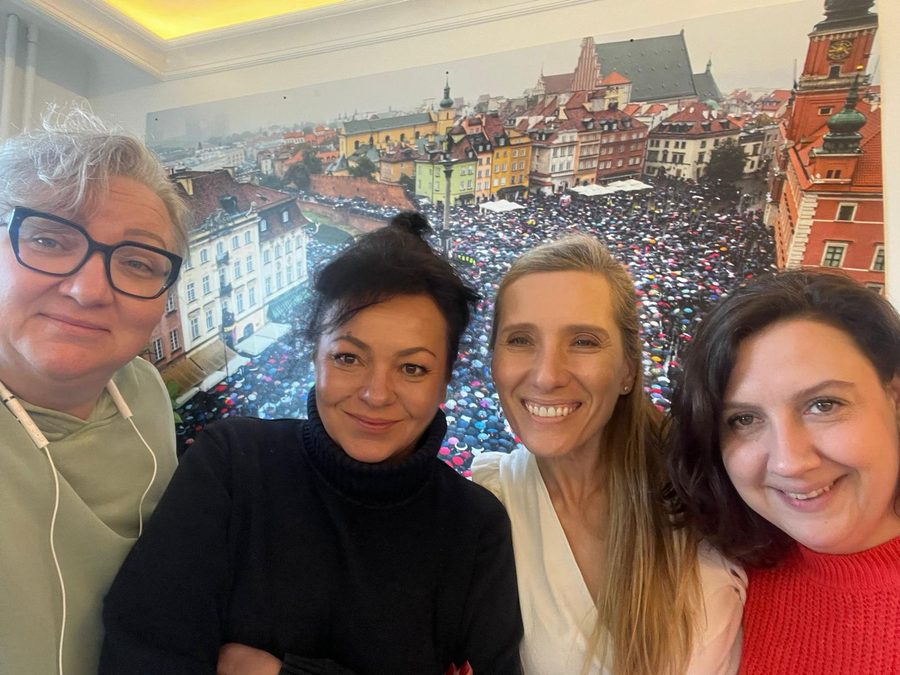
In the Strajk Kobiet office, during fieldwork. Source: Liza Tyl
PROJECT 02
Bricolage and Bodies in the Streets
This strand follows bricolage into the street. Drawing on the mass mobilisations in Poland between 2015 and 2023, it studies how ordinary people, making do with whatever is at hand, organise in defence of democratic freedoms and women’s rights, and how emancipatory and authoritarian movements compete to make one vision of the future dominant. It reframes civil society and grassroots organising as bricolage, and asks how the outcomes of these struggles shape the grand challenges we face globally.
SELECTED PRESENTATIONS
- Tyl, L. P., & Pullen, A. (2026). Bricolage as grassroots organizing in defense of democratic freedoms. Australasian Consortium for Entrepreneurship Research Excellence (ACERE).
- Tyl, L. P., & Pullen, A. (2025). Bricolage as a political tool: Reframing civil society in a young democracy. Society for the Advancement of Socio-Economics (SASE) Annual Meeting, Montreal, Canada.
- Tyl, L. P., Pullen, A., & Fotaki, M. (2025). Organising through bricolage: The struggle for women’s rights in Poland and two competing futures. Invited presentation, Nicolaus Copernicus University in Toruń, Poland.

PROJECT 03
Bricolage and Rules
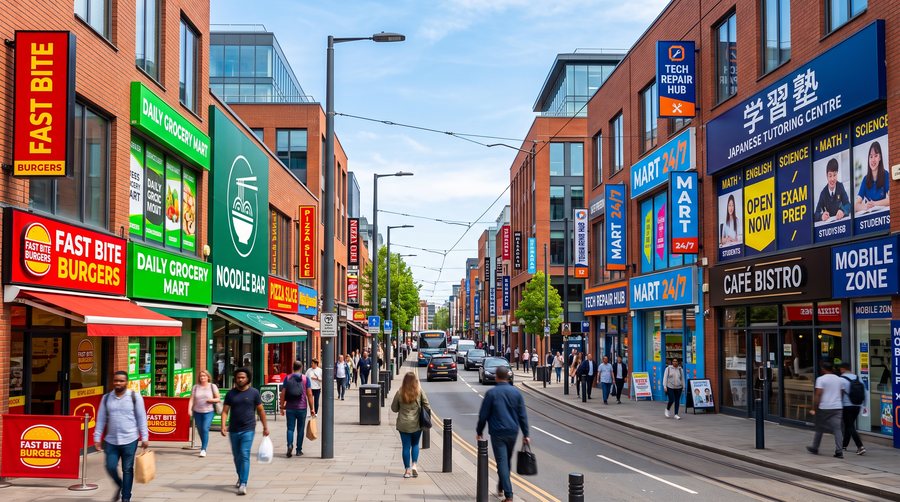
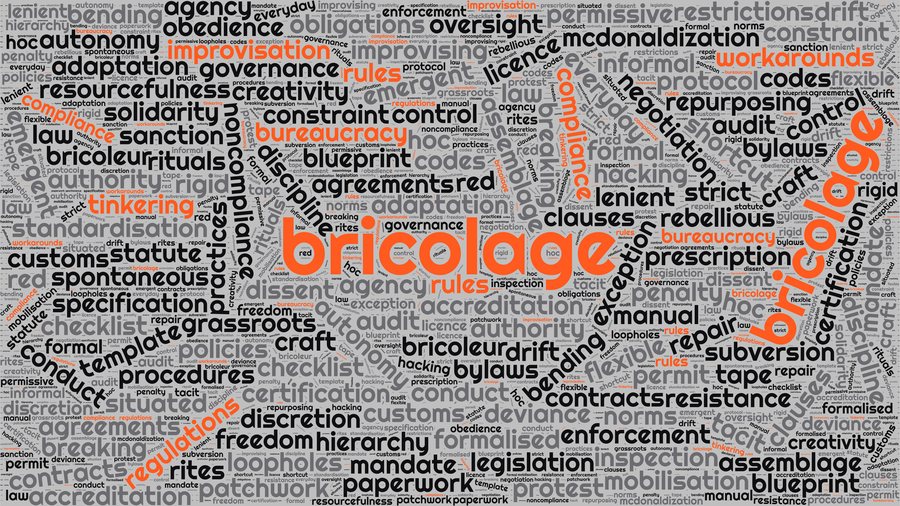
An ongoing line of research across different settings, held together by one question: what is the relationship between bricolage and rules? It asks how people work with, around, and against the regulative constraints they face.
The research journey travels from women’s spontaneous organising to protest strict legislative regulations that limit their rights, to franchisees tinkering within a tightly regulated industry. It also includes the tension between writing creatively and pursuing emergent approaches to research within the constraints of imposed templates and highly formalised forms of scholarship.
Bricolage and structure sit at the centre: what people actually do, set against what the rules prescribe. This relationship is explored at a deeper level through my doctoral studies, Navigating the Emergent and the Regulated: On the Dynamics of Bricolage and Structure.
SELECTED PRESENTATIONS AND PUBLICATIONS
- Tyl, L. P. (2020). Bricolage and engineering in franchising: Balancing standardisation and adaptation. Master of Research thesis, Macquarie University.
- Tyl, L. P. (2024). The role of bricolage in navigating paradoxical tensions in highly regulated environments. ACERE 2024.
- Tyl, L. P. (2023). Bricolage, engineering, and strategy: Navigating the paradoxical tensions of standardisation and adaptation. Paradox Research Education Practice (PREP) Conference 2023.
- Tyl, L. P. (2023). Bricolage and rules. UNSW Business School Organisations and Society Network Symposium.
- Tyl, L. P., Lundmark, E., & Chirico, F. (2023). Context in bricolage studies. ACERE 2023.